
Publications
SPARCLE scientists publish SCIENTISTS PUBLISH ACADEMIC ARTICLES, IMPLEMENTER-FOCUSED REPORTS AND PUBLIC PRESENTATIONS.
Featured Publications
-
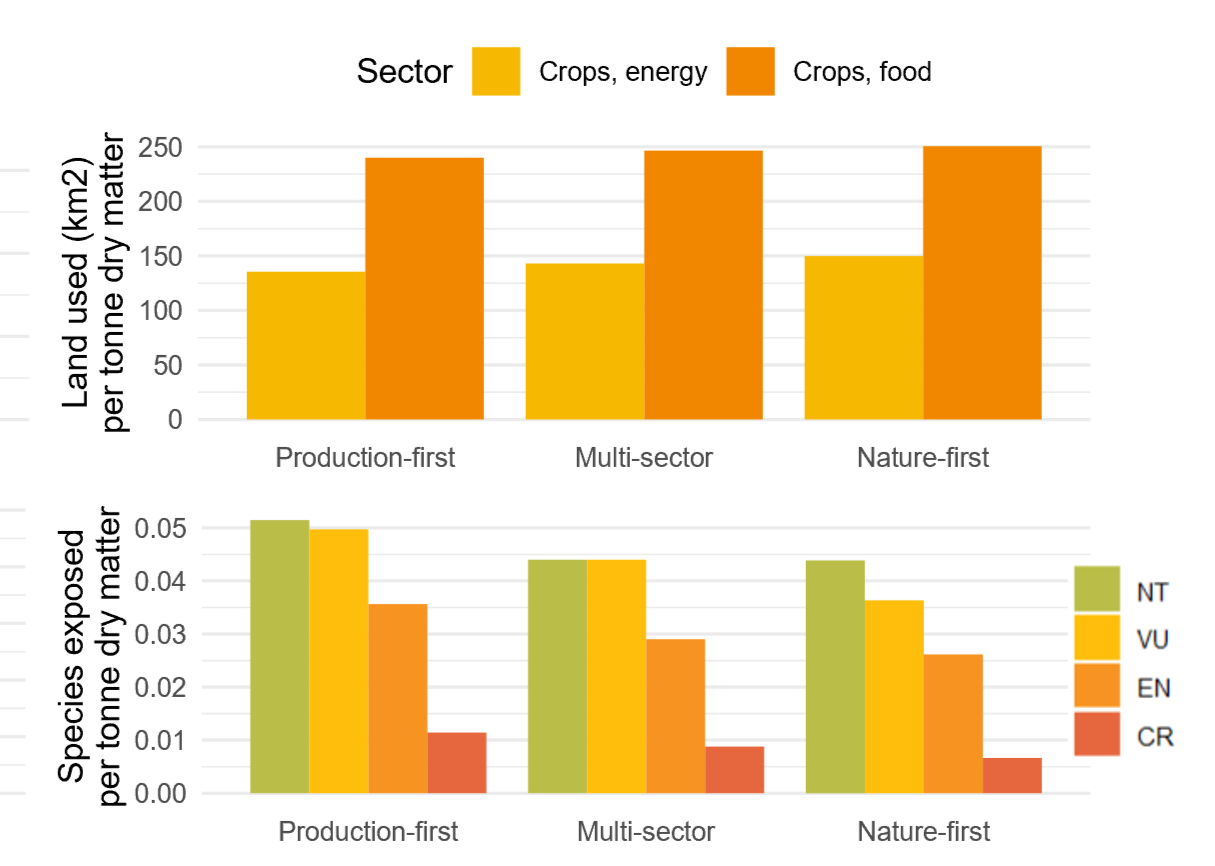
Balancing land use for conservation, agriculture, and renewable energy || Nature Communications, 2026.
This study finds that if future development is planned without consideration of nature, land demands for renewable energy and agriculture could impact nearly 1 million km2 of high-priority conservation areas, the habitats of 440 threatened species, and 21 Gt of carbon. The authors map out real opportunities for planners and governments to intentionally coordinate multi-sector land use planning and mitigate potential carbon and habitat loss.
-
Beyond species ranges: How functional diversity and integrated life history can inform conservation priorities || Proceedings of the National Academy of Sciences, 2025.
The author unpacks how conservation priorities shift when we look beyond species ranges to functional diversity and life-history traits. Functional hotspots often don't overlap with areas of high species richness, so integrating these metrics helps planners maintain ecological function, not just species presence. This can result in more resilient conservation strategies.
-
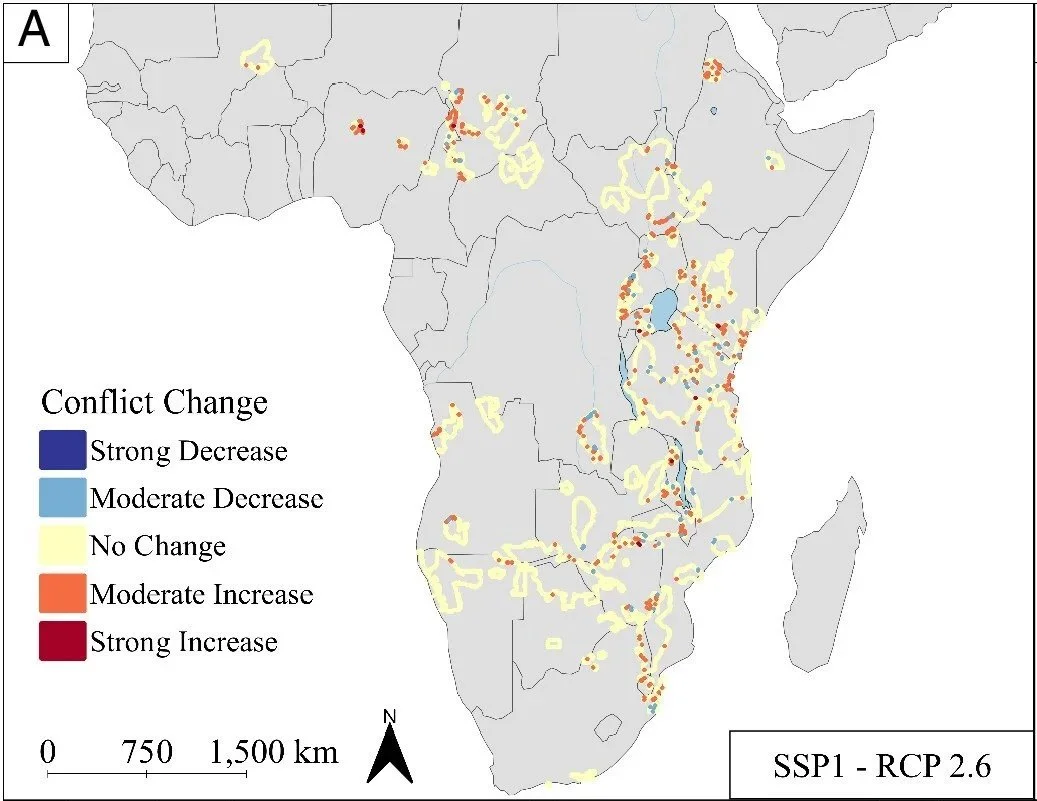
Effects of climate, land use, and human population change on human–elephant conflict risk in Africa and Asia || Proceedings of the National Academy of Sciences, 2024
Human-wildlife conflict is likely to shift with climate change. The authors map out likely shifts of human wildlife conflict, so that conservationists and wildlife managers can choose where allocate mitigation and conservation resources for conflict-prone species and regions. This analysis examines how projected climate change, shifts in agricultural footprint, and changes in human population may affect the distribution and intensity of conflict with Asian and African elephants.
sUPPORTING pUBLICATIONS
We use science to inform real-world decisions about where to protect, manage, and restore landscapes for people and nature. The publications below help our team better understand the social-ecological world and improve our scientific approaches
Communications Earth & Environment, 2025
Integrate biodiversity and resilience into climate-driven forest restoration strategies for the Atlantic Forest
One Earth, 2025
Biological Conservation, 2025
Environmental Research: Ecology, 2025
Proceedings of the National Academy of Sciences (PNAS), 2025
Proceedings of the National Academy of Sciences (PNAS), 2024
Assessing future environmental benefits of agricultural abandonment and recultivation
Environmental Research Letters, 2024
Protected area planning to conserve biodiversity in an uncertain future
Conservation Biology, 2023
Strategic Conservation of Global Vertebrates in Response to Climate Change
|| Ecological Applications, 2023
30% land conservation and climate action reduces tropical extinction risk by more than 50%
Ecography, 2022
Conservation needs to integrate knowledge across scales
Nature Ecology & Evolution, 2022
Areas of global importance for conserving terrestrial biodiversity, carbon and water
Nature Ecology & Evolution, 2021
Mapping the irrecoverable carbon in Earth’s ecosystems
Nature Climate Change, 2021